-
Why Apple Still Doesn't Have a TV Strategy
With the race to bring online video viewing to the TV now in full swing, I've continued to wonder why it is that Apple still doesn't have a TV strategy (or if they have one, why they haven't articulated it). More than 3 years since introducing Apple TV, its only TV-related product, Steve Jobs still routinely calls it a "hobby" and there has been virtually no innovation around it. Unsurprisingly, its sales have languished.
Asked at the D8 conference last week when Apple is going to do something in the TV arena, Jobs replied that the "problem with innovation in the TV industry is the go-to-market strategy. There's a subsidized business model that gives everybody a set-top box for free or for $10/month - and that pretty much squashes any opportunity for innovation because nobody's willing to buy a set-top box." As a result he said, "all you can do is add a box on" and that this brings "a table full of remotes, cluster of boxes and bunch of different UIs." Jobs asserted that the only way things will change is to "go back to square one and tear up the set-top box and redesign it from scratch."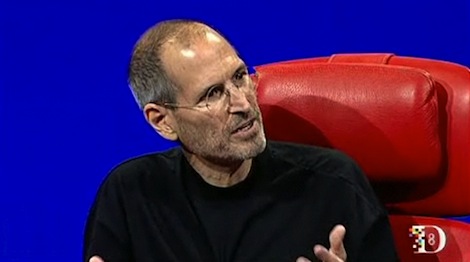
Of course, there is virtually no chance that cable/satellite/telco-provided set-top boxes are going away any time soon, which, given Jobs's definition of the problem, will leave Apple on the outside looking in as consumers hunger to view online video on their TVs. From my perspective there are at least 3 reasons Apple appears stymied.
1. Apple can't meet its own high standards - What has worked so well for Apple in its other products - excellence in product design, simplicity and customer experience - with a strong opportunity for control - can't be achieved in the Pay-TV industry. When Jobs cites the central role of the set-top box, what he's really saying is that it precludes Apple's ability to create one simple product to control ALL of a viewer's TV experiences. If Apple can't do that, then it just won't play ball.
2. Apple's focus on devices limits its options - Jobs's focus on the set-top box reflects Apple's device orientation. Given TV's realities, that might be limiting and therefore to its disadvantage. For example, faced with the same context, Google is instead pursuing an open, platform-centric approach, so that online video content that currently lives outside the set-top box's parameters can reach the TV, with rich interactivity and multi-platform potential. Plus, Google has focused on how to bring new value to the existing TV ecosystem rather than disrupting it. In short, Google's pragmatism has allowed it to see a possible way in to the TV business. It remains to be seen whether it succeeds of course, but at least they're in the game, learning as they go.
3. The Pay TV industry doesn't want or need Apple - in both music and smartphones, for example, Apple's products held out the potential to add a huge amount of new value for incumbent players. In the Pay TV industry this isn't the case. Despite vigorous competition within the industry, virtually all participants, both operators and programming networks are doing well. Though there's plenty of speculation around cord-cutting, little has materialized. Meanwhile the industry is innovating, albeit at its own pace. In short, a game-changing approach from Apple that disrupts the current business model isn't welcome or required by any of the incumbents. No doubt Apple heard this loud and clear when it recently floated a $30/month subscription approach.
It's still very early days in the convergence space, so Apple is by no means out of the running. But until it can figure out a way to navigate the above constraints, it's unclear what Apple's TV strategy will be or when it might emerge. At this week's worldwide developer conference we might see a new $99 Apple TV device unveiled, but if rumors are accurate, it can hardly be considered a cornerstone of a TV strategy. With Apple, we've come to expect things that are breakthrough and bold. When it comes to TV, we'll have to keep waiting.
What do you think? Post a comment now (no sign-in required).Categories: Devices
Topics: Apple, Apple TV, Google

Connect with VideoNuze
Exclusive News Roundup
- YouTube Offers Advertisers Placement Near Top-Performing Shorts Mediapost
- Netflix Will Stop Reporting Subscriber Numbers Starting in 2025 Variety
- Digital Ad Revenue Growth Decelerates Again in 2023, Per IAB Ad Revenue Report AdExchanger
- Amazon brings its “Amazon Live” shoppable video to Prime Video and Freevee TechCrunch
- Disney reportedly wants to bring always-on channels to Disney Plus The Verge
- Video Viewing Rises Significantly in U.S. Internet Households TV Tech